
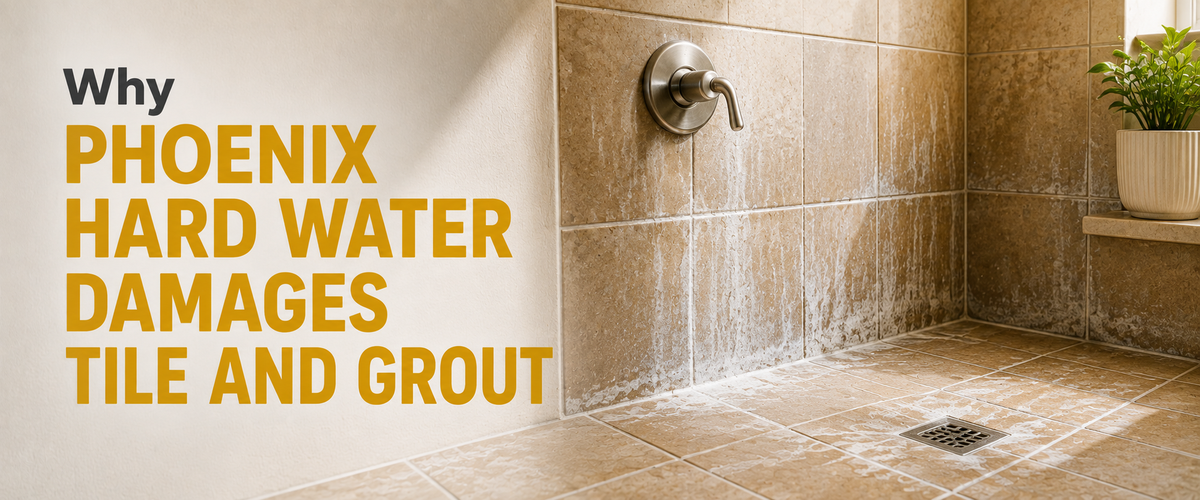
Every home in the Valley shares the same invisible opponent. It runs through the pipes, hits the shower daily, and slowly wears down tile and grout in ways most homeowners never fully connect back to the water itself.
Anyone booking tile and grout cleaning Phoenix service eventually asks the same question, once the pattern becomes obvious. Why does grout here seem to discolor and wear out faster than in other parts of the country? The answer sits in the water itself, and understanding it changes how homeowners approach both cleaning and long term maintenance.
ER Grout & Tile Restoration LLC, owned by Emil Bortis, has treated the effects of Phoenix hard water on tile and grout for years. Here is exactly what is happening and what actually helps.
What Makes Phoenix Water So Hard
Phoenix water carries a notably high mineral content, primarily calcium and magnesium, well above levels considered mild in much of the country.
- High calcium content
- Elevated magnesium levels
- Consistent year round hardness
That constant mineral load means tile and grout face a slow, steady challenge every single day, not just during heavy use or specific seasons.
How Hard Water Actually Damages Grout
Grout is porous by nature, which makes it especially vulnerable to what hard water leaves behind.
Minerals in the water settle into grout as it dries, building up layer after layer over time. That buildup gradually shifts grout color, often toward a dull, grayish or yellowed tone regardless of the original shade. Left untreated, this same mineral buildup weakens the grout's surface over time, making it more prone to cracking and crumbling. If hard water has left your tile or grout stained, dull, or difficult to clean, contact our Phoenix tile and grout specialists to discuss the right cleaning solution for your surfaces.
How Hard Water Affects Tile Itself
Tile generally holds up better than grout, but it is not entirely immune to the same mineral effects.
- Etching on natural stone surfaces
- Dulling on glossy tile finishes
- Cloudy film on glass tile accents
Natural stone tile is particularly vulnerable, since its porous surface absorbs minerals in a way that denser porcelain or ceramic simply does not experience to the same degree.
Why Regular Cleaning Alone Is Not Always Enough
Household cleaning removes surface level buildup, but hard water minerals often penetrate deeper than a typical mop or spray can reach.
- Mineral deposits embed into grout pores
- Surface cleaning misses deeper buildup
- Professional steam extraction reaches further
This gap is exactly why homes with a consistent mopping routine can still develop noticeable grout discoloration over time, since the real issue sits below what surface cleaning actually touches.
Stop Hard Water From Ruining Your Tile and Grout
Because hard water buildup can affect different tile and grout surfaces, the right cleaning method matters. Learn more about our tile and grout restoration team to see how we approach these surfaces with professional cleaning and restoration methods Phone: (602) 653-0154
Preventing Hard Water Damage Before It Starts
A few proactive habits meaningfully slow how quickly hard water affects tile and grout.
Squeegeeing shower walls after each use prevents water from sitting and drying directly on grout lines. Applying a quality grout sealant creates a protective barrier that resists mineral penetration far better than unsealed grout.
A whole home water softener, while a larger investment, addresses the root cause across the entire house rather than treating individual rooms separately.
When Damage Has Already Set In
Once hard water damage has progressed past early discoloration, a few different paths become available depending on severity.
- Deep professional cleaning for early staining
- Color sealing for structurally sound grout
- Full restoration for cracked or crumbling grout
Once grout has been thoroughly cleaned, grout color sealing can provide an additional layer of protection and help maintain a more consistent appearance.
Why Professional Cleaning Makes a Real Difference
Professional equipment reaches mineral buildup that household tools genuinely cannot access effectively.
- Steam extraction lifts embedded minerals
- Professional grade solutions target buildup
- Post cleaning sealant slows future damage
This combination is standard across every tile grout cleaning Phoenix service performed, since cleaning without a protective follow up sealant leaves grout vulnerable to the exact same buildup returning within months.
Why Phoenix Homeowners Trust ER Grout & Tile Restoration LLC
Emil Bortis founded ER Grout & Tile Restoration LLC in 2010, backed by over two decades of hands on industry experience treating exactly this problem.
- Fully licensed under AZ ROC #311555
- Insured, background checked technicians
- BBB listed
- Upfront pricing, satisfaction guarantee
As a trusted az tile and grout specialist, the team helps homeowners across Phoenix, Scottsdale, Mesa, Chandler, Gilbert, Tempe, and Paradise Valley understand exactly what hard water has done to their tile and grout, and what the most cost effective path forward actually looks like.
Get a Free Hard Water Damage Assessment
Not sure how much hard water has affected your tile and grout? Tired of scrubbing the same stains that keep coming back? Let ER Grout & Tile Restoration LLC tackle the mineral buildup that household cleaning often leaves behind.
From deep tile and grout cleaning to grout recoloring and restoration, we can help bring your surfaces back to a cleaner, fresher condition. Let us take a look and give you honest answers.
Early discoloration often responds well to professional cleaning and color sealing. More advanced damage, like cracking or crumbling, typically requires full grout replacement rather than cleaning alone.
A whole home water softener significantly reduces mineral buildup, but it does not eliminate the need for regular cleaning and periodic sealant maintenance on existing tile and grout.
Yes. Natural stone is more porous and prone to etching from mineral deposits, while denser porcelain or ceramic tile holds up considerably better under the same hard water conditions.